To be listed on the haciendadelalamo TODAY MAP please call +34 968 018 268.
PROPERTY SEARCH
article_detail
Date Published: 23/04/2026
Just days away from the May half-term holidays, a dangerous visitor has been spotted on Granada's beaches
The highly venomous Portuguese man o' war has recently been spotted just off the coast of Almuñécar
With the May half-term just around the corner and plenty of families gearing up for a trip to the coast, the timing of this latest news is a little worrying to say the least. Several Portuguese man o' war have been spotted in the waters off Almuñécar in Granada in recent days, some around four miles out to sea and others closer in near Punta de la Mona.
The sightings were recorded by the Department of Zoology at the University of Granada, which has been monitoring the Granada coastline closely for these highly venomous critters. It's not the first time they've turned up in the area either, as a specimen was found on San Cristóbal beach back in March, although thankfully on that occasion no injuries were reported.
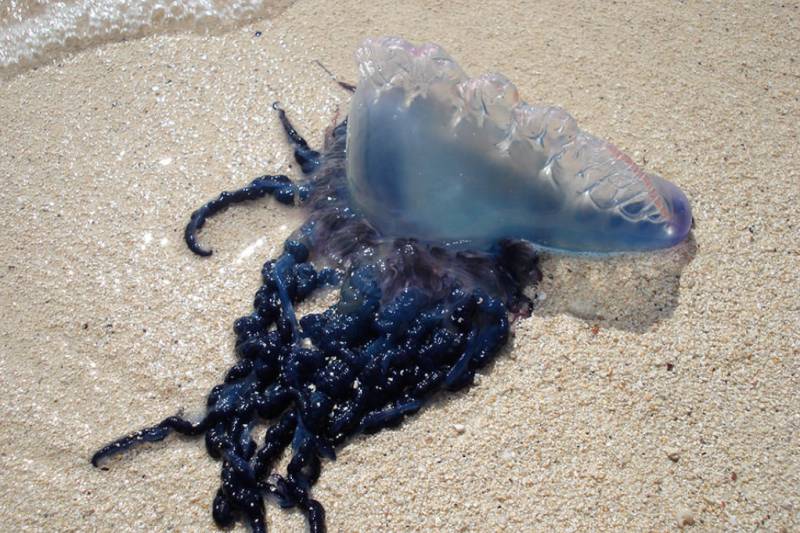
The Portuguese man o' war is frequently mistaken for a jellyfish, but it's actually something quite different and arguably more alarming. It's not even a single creature, but a colony of tiny specialised organisms working together as one, forming a blue or violet-tinged floating sac and sail between 15 and 30 centimetres across, with tentacles that can trail anywhere from around 10 metres down to a genuinely extraordinary 40 metres in length. Those tentacles inject a paralysing toxin on contact that causes intense burning, inflammation and extremely painful lesions, and in serious cases can lead to respiratory and cardiac problems.
They're designed to immobilise fish, but they're just as effective on an unsuspecting swimmer.
Beaches where they're present will typically fly a red flag, as happened at several spots along the Cantabrian coast last summer, so it's always worth checking before you go in.
Experts point to two main reasons why these creatures are showing up more frequently on Spanish coasts, both Mediterranean and Atlantic. According to specialists, rising sea temperatures linked to climate change are making conditions more hospitable for them in waters where they were previously rarely seen. At the same time, their natural predators, including the ocean sunfish and sea turtles such as the leatherback, loggerhead and green turtle, are in serious decline due to fishing, plastic pollution and ghost nets, meaning there's far less keeping their numbers in check.