








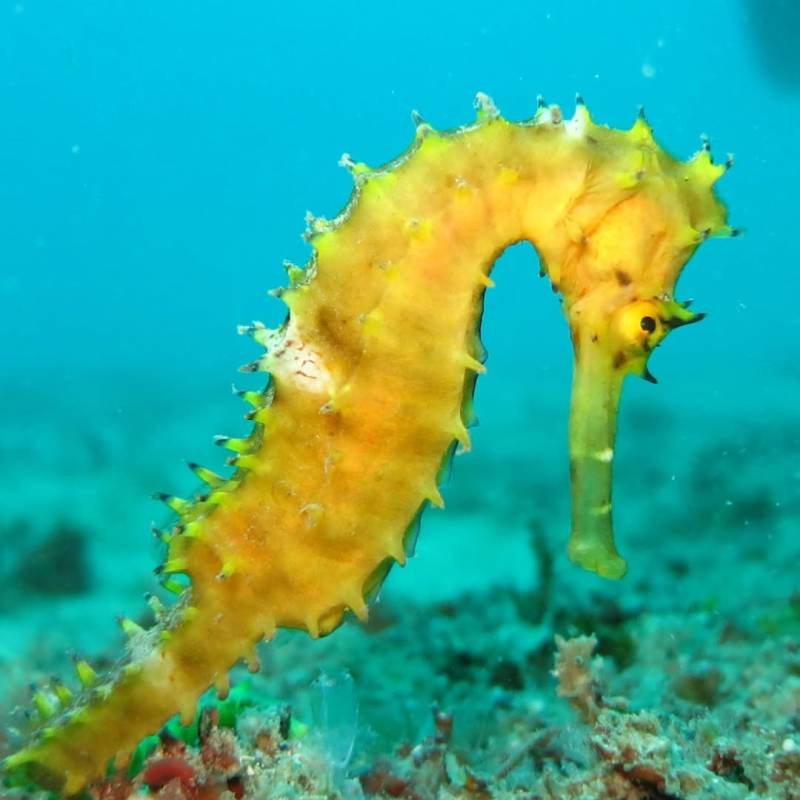








After nearly 20 years spent counting seahorses beneath the waters of the Mar Menor, conservationists finally have something to celebrate. The lagoon’s best-known little resident has been given stronger protection in Spain, following a long campaign to get its plight recognised.
The long-snouted seahorse (Hippocampus guttulatus) was officially classified as a vulnerable species on Monday October 19, following the publication of a new order in Spain’s Official State Gazette (BOE).
It's an important step for an animal that has suffered a devastating decline in the Mar Menor, where its population has fallen by around 99%. The new classification means the Murcia Region must now draw up a conservation plan within five years, setting out how the species will be protected.
For the Asociación Hippocampus, which has spent years campaigning for the change, the announcement is the result of almost two decades of work. Since 2006, its volunteers have carried out underwater surveys to count seahorses, monitor their numbers and gather evidence of what has been happening to the species.
In a message celebrating the news, the association thanked the volunteers, scientists, businesses and institutions that have supported its work over the years. Its members have continued diving in all conditions, from cold weather and heat to storms and DANA episodes, determined to build a clearer picture of the seahorse population.
The research has also helped document the dramatic decline of seahorses in the Mar Menor and the Mediterranean, with findings published in the scientific journal The Journal of Fish Biology. The association formally asked Spain’s Ministry for Ecological Transition to upgrade the species' protection two years ago.
There is still plenty to do, though. Asociación Hippocampus has stressed that being classed as vulnerable does not mean the seahorse is out of danger. It is now calling for a national recovery plan to protect the species and restore its habitats along Spain's coastline.
In Murcia, the University of Murcia's aquarium already holds around 4,000 long-snouted seahorses in captivity. Its breeding programme provides a potential source of animals for repopulation if another environmental emergency affects the lagoon.
The regional government also plans to continue conservation and breeding work through the new Mar Menor Species Recovery Centre, alongside ongoing monitoring and cooperation with Asociación Hippocampus.
After years of collecting data and campaigning for change, the association has finally secured the recognition it wanted. The challenge now is to make sure that protection translates into real progress for the seahorses and the lagoon they call home.
Image:Asociación Hippocampus