











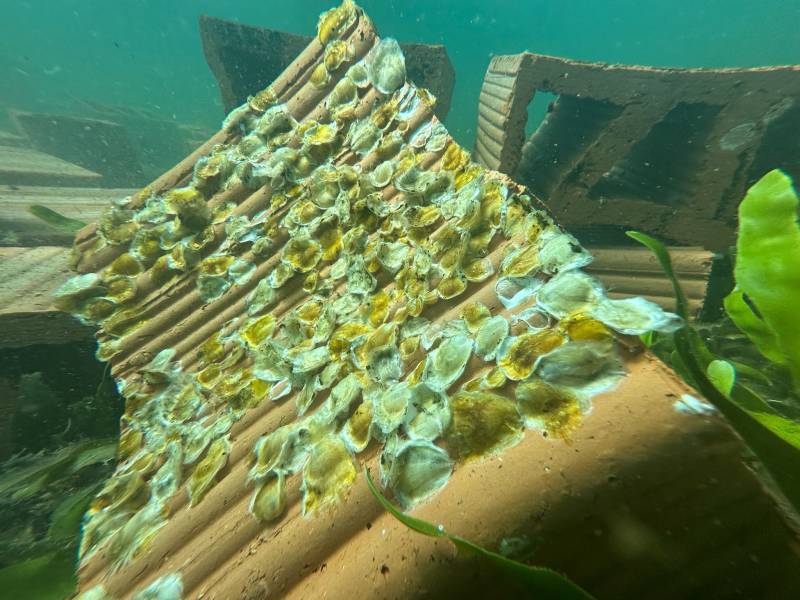








Scientists are continuing to study how native flat oysters (Ostrea edulis) can play a part in restoring the Mar Menor. These oysters are natural water filters and could help improve water quality, support local wildlife, while also supporting the local economy.
The RemediOS project, led by the Spanish Institute of Oceanography (IEO-CSIC), has been investigating how oysters can remove pollutants from the lagoon. This nature-based approach is designed to help tackle pollution while supporting the overall recovery of the ecosystem. Researchers have also been looking at how the area's salt channels could be used to farm oysters and other shellfish, while still keeping salt production going.
At a recent event in San Pedro del Pinatar, the project shared its latest results. María Cruz Ferreira, Regional Secretary for Energy, Sustainability and Climate Action, said restoring the Mar Menor requires real coordination between government bodies and strong partnerships with local communities and businesses. She added that sustainable activities in protected areas must follow clear environmental rules and legal guidelines.
Visita a las Salinas y Arenales de San Pedro del Pinatar (Murcia) para mostrar los trabajos que se realizan en @RemediOSproject para el uso de la ostra común como regenerador del Mar Menor 🌊🌿@FondosUE_Esp @OficinaMarMenor pic.twitter.com/zmlHgttE3u
— Fundación Biodiversidad (@FBiodiversidad) February 19, 2026
The project has already reached some important progress. Researchers have bred flat oysters in captivity, cultivated them in local channels, and set up brick reefs near Isla del Barón. These oysters filter harmful particles, phytoplankton, and microorganisms from the water. Once fully established, a healthy oyster population, alongside other shellfish such as clams and mussels, could carry out up to twelve full water filtration cycles each year.
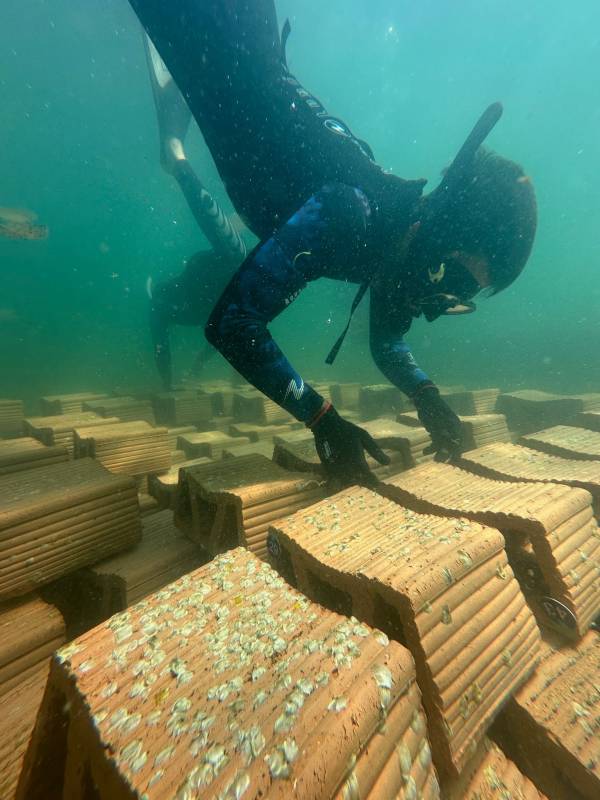 The next phase of the project, RemediOS-3, will focus on selecting oysters that can survive higher water temperatures. Researchers will also explore the potential for commercial oyster farming while continuing to study how the oysters can improve water quality at different depths in the lagoon. The project includes educational activities and training for the families of local fishermen, giving them the chance to create sustainable business opportunities alongside ecological restoration.
With help from researchers, local organisations, and the EU, the project is showing how science and community efforts can work together to restore the Mar Menor, with oysters proving to be a real pearl for the lagoon.
Read also: Three more convictions For illegal wastewater dumping in the Mar Menor
Images: RemediOS project