









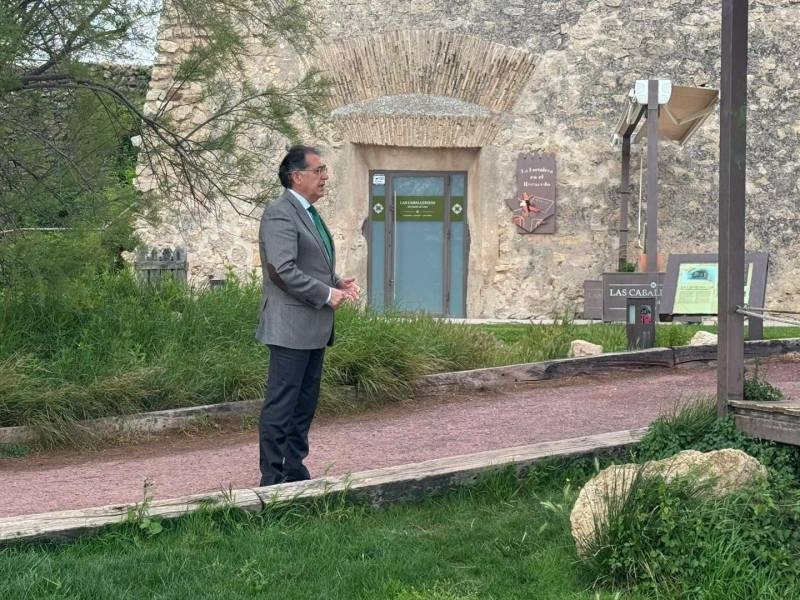






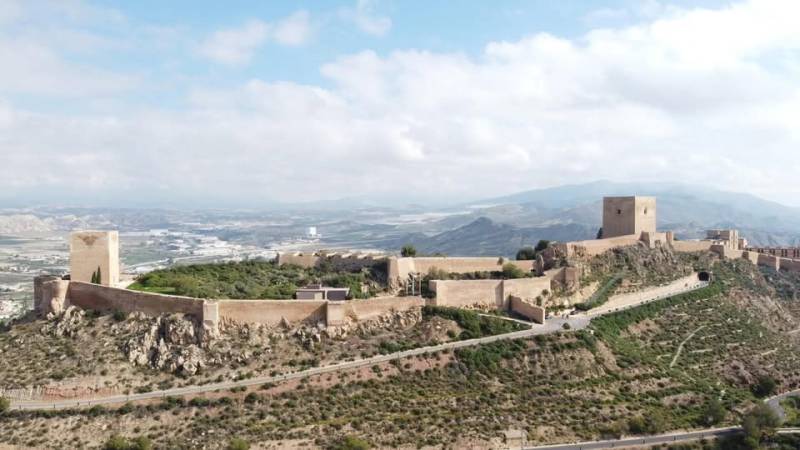
The city of Lorca has started work on a new project that will see the landscape around its famous castle restored and improved with a stronger focus on nature, sustainability and water efficiency.
The work is taking place at the Castillo de Lorca, also known as the Fortaleza del Sol, one of the city's most important and historic landmarks. The project forms part of a larger tourism sustainability plan, which is being funded through the Next Generation EU programme.
In total, €136,000 is being invested across both the interior of the castle grounds and the surrounding slopes. The idea is not to redesign the space as such, but to work with what is already there and strengthen it using natural methods. That includes planting native species, improving soil in selected areas and updating irrigation systems so water is used more efficiently.
Inside the castle grounds, around 16,000 square metres will be improved. This includes areas that already have green space as well as zones close to archaeological remains, which need to be carefully protected. The approach being used is based on nature-based solutions, which basically means using plants, soil and natural materials rather than heavy construction to manage the landscape.
One of the most interesting parts of the castle is its butterfly garden, which was created back in 2017. It was designed using native plants that attract butterflies and support them through all stages of their life cycle, turning part of the castle into a small natural habitat.
As part of this new project, that butterfly-friendly area will be expanded. More native plants will be added, chosen specifically because they support local butterfly species.
Outside the castle, a larger restoration project is also underway across more than 51,000 square metres of hillside. This area is more exposed and has a higher risk of erosion due to the steep terrain. Here, the focus is on planting native vegetation that helps hold the soil in place, reduces runoff during heavy rain and gradually restores natural ground cover.
Local councillor for Culture and Tourism Santiago Parra said the project is an important step in protecting both the monument and its surroundings, while also improving the overall visitor experience.
He also said that the aim is to keep moving towards a more sustainable model of tourism, where heritage sites are cared for in a way that respects both the environment and their long-term preservation.
Images: Ayuntamiento de Lorca
The rich and extensive history of Lorca has left a legacy of archaeological sites, and historic buildings, around which the modern city has built its tourism industry. Among these are Lorca Castle, the Jewish quarter of the castle and synagogue, Plaza de España, Colegiata de San Patricio, Museo de Arqueologico Municipal, Iglesia de San Francisco, Casa Huerto Ruano, Palacio de Guevara, Iglesia de San Mateo, Pósito de los Panaderos, Convento Virgen de las Huertas, Antiguo Convento de la Merced, Iglesia del Carmen and the Teatro Guerra.
 Unfortunately Lorca has also been prone to natural disaster, suffering a Gota Fría on September 28th 2012, as well as two earthquakes measuring 5.3 and 5.5 on the Richter scale on 11th May 2011, claiming 9 lives. Since this earthquake the city has been rebuilding, winning recognition for its Lorca, Open for Restoration initiative, which used the restoration of the city as a tourist attraction whilst it rebuilt its historical buildings, some of which are currently still not open.
The tourist office relocated for 14 years to Calle San Patricio, near the church, but has now returned to its former premises alongside the Palacio de Guevara in the Plaza Concha Sandoval, or Plaza de la Bordadora (click for map).
Lorca also has an area of coastline incorporating the Parque Regional de Cabo Cope - Puntas de Calnegre, in the Sierra de Almenara, which includes the beaches of Puntas de Calnegre, Baño de las Mujeres, San Pedro, El Siscal, Cala Honda, Cuartel del Ciscar, Junquera, Cala de la Gruta, Cala Leña, Los Hierros, Cala Blanca and Playa Larga, although many are accessible only along difficult tracks or by boat!

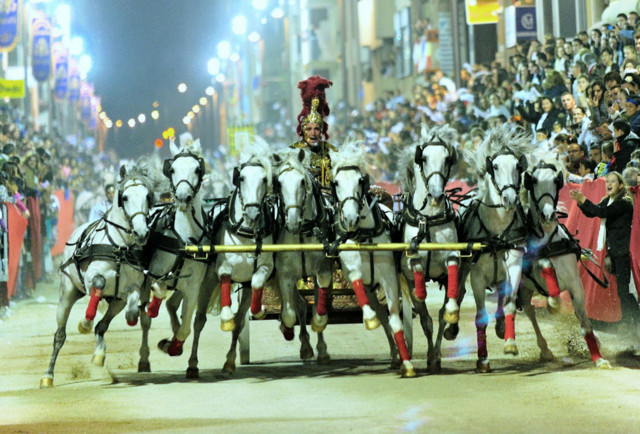
However, in spite of its many attractions, the name of Lorca is synonymous with Easter, (Semana Santa) its biblical parades of International Tourist Interest status and famous throughout Spain. The week includes a series of processions in which the Whites (Paso Blanco) and Blues (Paso Azúl) try to outdo each other with the magnificence of their embroideries and the skill and daring of their horsemen.
Lorca also has a Parador hotel, located within the historic castle.
Every day of the year apart from 1st and 6th January and 25th December, 10.00 to 14.00 and 16.30 to 18.30 (except Sunday afternoons).
These opening times are often extended and other information points created during the Semana Santa celebrations.
For more local news, events and visiting information go to the home page of Lorca Today