Date Published: 25/02/2026
Record January for algae removal in the Mar Menor
ARCHIVED ARTICLE -
Heavy rain across Murcia has caused a worse biomass build-up than ever before
In just the first month of 2026, some 1,158 tonnes of biomass were taken out of the lagoon. By early February, a further 535 tonnes had already been collected. According to the regional government, this is significantly higher than what is normally seen at this time of year.
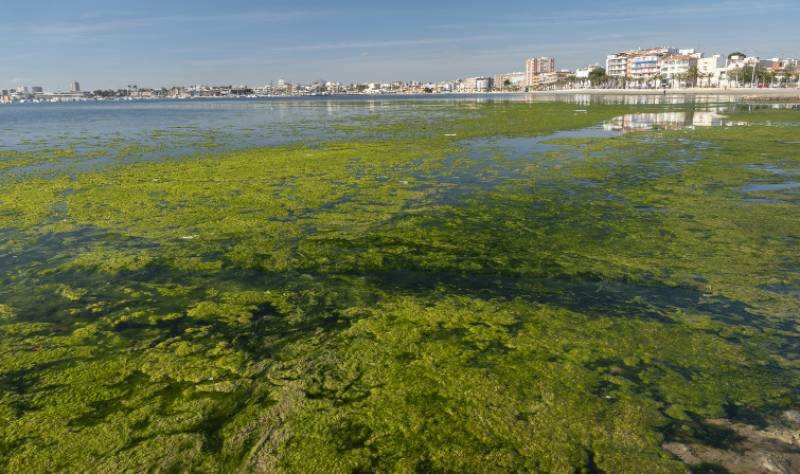
The term biomass refers to the thick build up of algae, seaweed and decaying organic matter that accumulates in the lagoon and washes up along the shore. When it rots,
it can get incredibly smelly and leave beaches covered in dark, muddy looking deposits.
The main reason for the spike appears to be rain.
The regional authorities have explained that
water inflow into the Mar Menor has increased fivefold so far this hydrological year, which began on October 1. Around 6.40 cubic hectometres of water have entered the lagoon compared to just 1.10 during the same period last year.
When heavy rain falls on surrounding agricultural land, it washes nutrients such as nitrates and phosphates into the lagoon. These nutrients act as fertiliser for algae. The more nutrients in the water, the faster algae grow.
This process, known as eutrophication, has been at the heart of the Mar Menor’s environmental crisis for years. Rapid algal growth clouds the water and when the algae die, they sink and decompose, consuming oxygen. In extreme cases
this has led to fish die-offs and major ecological damage.
What is being removed now is the physical result of that process. Once the algae die and accumulate, they have to be collected manually to prevent them building up on beaches and in shallow water.
Despite the effort, some residents in Los Urrutias have voiced frustration on social media about the state of the local beaches. For them, the repeated presence of algae suggests that the underlying problem has not been resolved.
Officials have also pointed out that winter high pressure systems naturally lower the lagoon’s water level. When this happens, areas that are usually submerged become exposed, making organic matter more visible. In reality, this is just a characteristic seasonal process of the lagoon, but it’s true that it can give the impression that conditions have worsened.
Responsibility for the clean up is split. The regional administration manages the removal of biomass from the water, while
Cartagena City Council is in charge of clearing sand and maintaining the beaches.
There’s also an interesting scheme underway to turn the problem into something more useful. A project presented last year is examining whether the collected biomass could be transformed into fertiliser instead of being sent to landfill, which has been the only destination until now.
Image: ANSE
article_detail

|