





















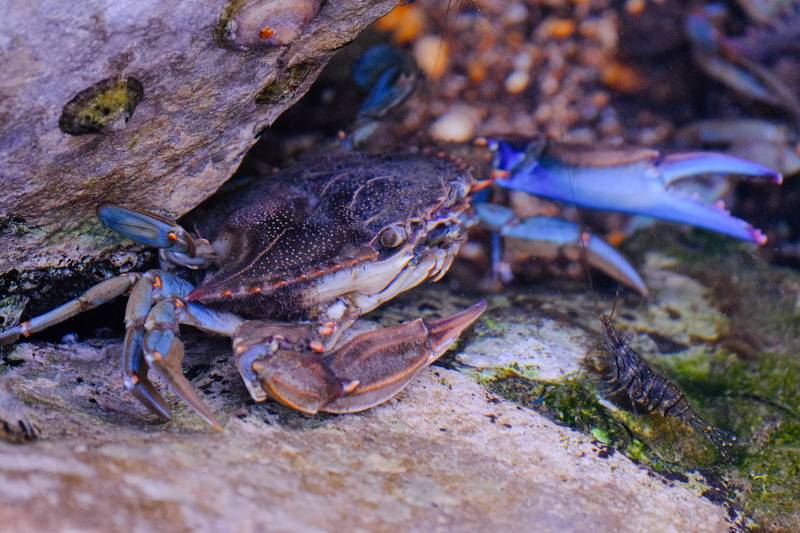
A study by the Spanish Institute of Oceanography (IEO-CSIC) has found microplastics in blue crabs living in the Mar Menor, raising concerns about both environmental pollution and the potential risks linked to their consumption.
Researchers examined multiple samples of the invasive species and found that 100% contained tiny plastic particles, including fibres and fragments from common plastics. The study was carried out to better understand the extent of this contamination in the Mar Menor.
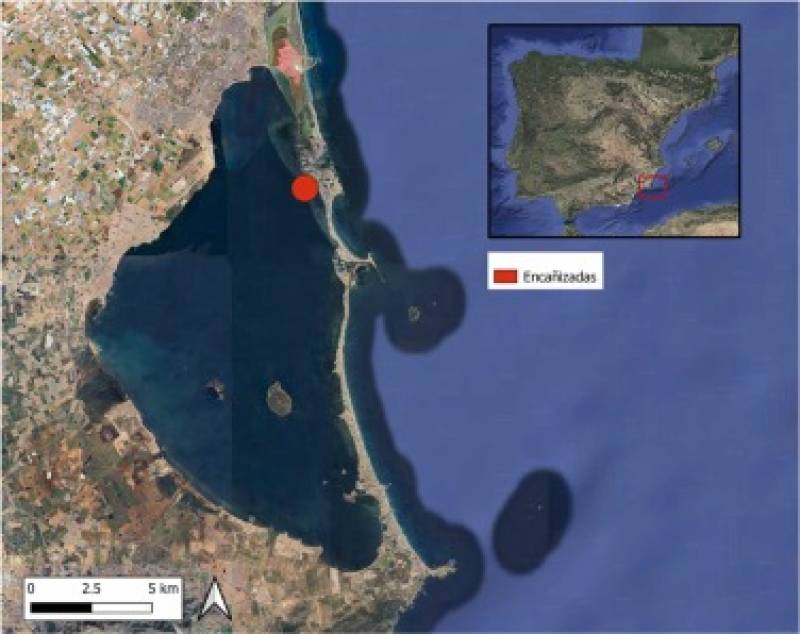 The findings, published in Regional Studies in Marine Science, have prompted scientists to flag potential concerns around the growing fishing and commercial use of the blue crab. People are catching and selling the blue crab partly to make money, but also as a way to reduce its population because it’s an invasive species spreading in the Mediterranean.
Experts say the presence of microplastics in muscle tissue, the part that is typically eaten, could affect product quality and may expose people to these contaminants.
Researchers also point out that the blue crab is particularly vulnerable to this type of contamination. It eats a variety of food, lives near the seabed where microplastics build up, and is now common across the Mediterranean.
Because of this, scientists suggest it could also be used as a bioindicator, helping to track the levels of microplastic pollution over time and across different coastal areas.
 Experts from the Oceanographic Centre in Vigo and lead authors of the study said the results could help improve how scientists monitor microplastic pollution and develop ways to reduce its impact on marine life and fisheries.
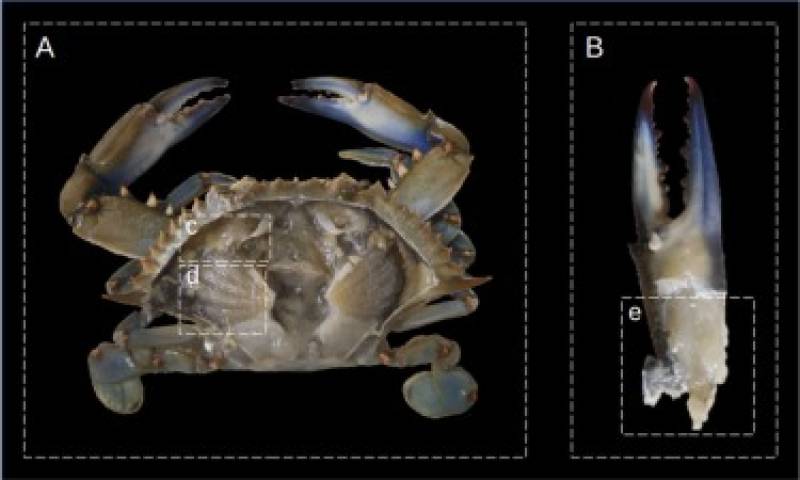
One of the most important parts of the research was finding a way to extract microplastics from the crab's body without damaging them. To do this, the team used a carefully controlled chemical process at 40°C, followed by high-resolution laser imaging to identify the plastic particles.
The study also points to something interesting about the crab's biology. It has a structure in its digestive system called a 'gastric mill', which works like a grinding mechanism. Researchers believe this may be breaking larger pieces of plastic into much smaller fragments, which can then pass into the body and build up in tissues such as muscle.
The findings show how far microplastic pollution has spread through marine environments. Finding it in a crab that is already being fished and eaten raises questions not just about ecosystem health, but also about possible exposure further up the food chain and what that could mean for people who consume it.
Image 1: CC/ WitherSweat
Image 2-3: sciencedirect.com